
PRODUCTS
Shift fork
- Model:-
- Made Year:-
- Color:-
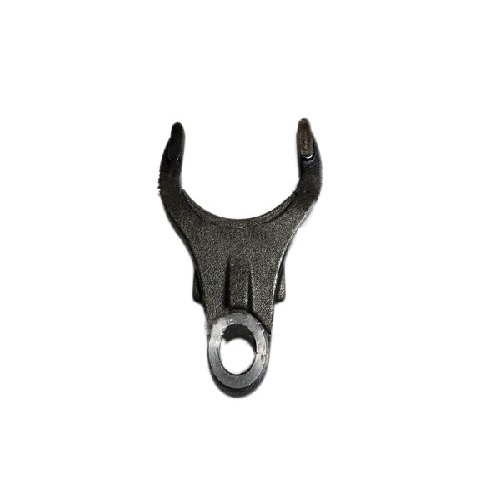
Description and specifications
-wrap-mode: nowrap;">Shift forks are critical components in the transmissions of heavy-duty vehicles such as trucks, commonly found in the drivetrains of models like Shacman and Howo.
Core Information
Function
Serving as the link between driver operation and transmission gear movement, shift forks engage synchronizers or gears to change gears, controlling the power transmission ratio.
In forward gears, it works with the synchronizer to eliminate speed differences between gears. In reverse gear, it directly engages the gear (reverse gear lacks a synchronizer).
Structural Features
The main body is a metal casting featuring a “U-shaped fork arms + shaft hole” structure. The shaft hole connects to the shift fork shaft, while the fork arms contact the gear/synchronizer.
Certain designs incorporate drum-shaped fork arms (line contact) and equal-strength structures to enhance shift smoothness and prevent sticking.
Importance
Its dimensional accuracy directly impacts shift fluidity and reliability: insufficient mating precision may cause poor gear engagement and interrupted power transmission; inadequate structural strength may lead to deformation, sticking, or other failures.